The Ultimate Guide: Driving from Puerto de la Cruz to Mount Teide
For many visitors to the north of Tenerife, the drive to the summit of Mount Teide is a holiday highlight. Rising from the Atlantic, Spain’s highest peak (3,715 metres) dominates the island’s landscape.
Compare Car Hire DealsSearch & Compare Car Hire Deals
Free cancellation on most vehicles
The Route: TF-31 → TF-21 via La Orotava
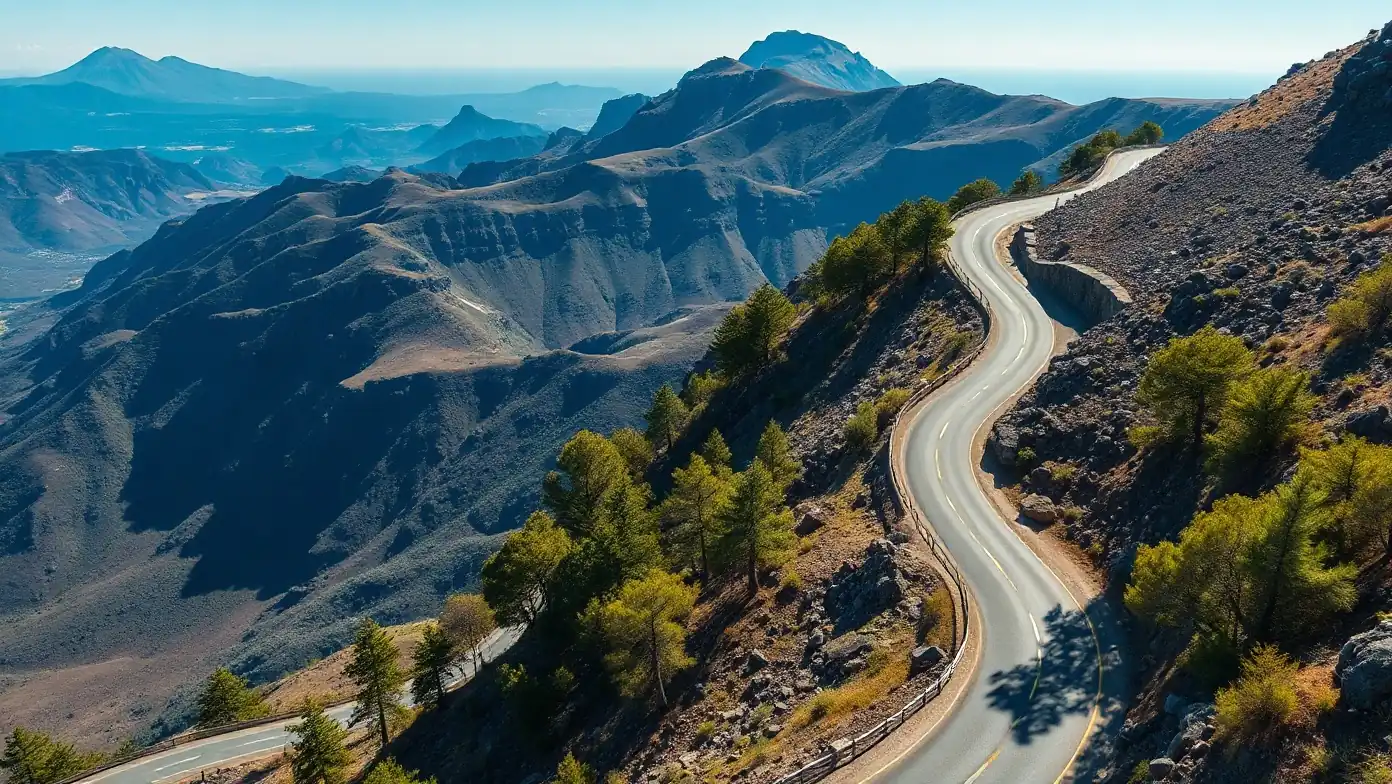
The drive from the coast to the high caldera of Teide National Park is one of the most striking road trips in Europe. In just over an hour, you will move from sub-tropical banana plantations and palm trees, through dense pine forests, and into an eerie, moon-like volcanic landscape.
- Puerto de la Cruz (TF-31)
- La Orotava (TF-21) — (Gateway Town)
- Corona Forestal (Pine Forest & La Caldera)
- El Portillo (National Park Entrance)
- Teide Cable Car Base Station (2,356 m)
Route Statistics
- Distance: Approximately 42 to 47 kilometres (depending on your starting point in Puerto de la Cruz).
- Driving Time: 50 minutes to 1 hour and 15 minutes (without stops).
- Altitude Gain: From sea level to 2,356 metres at the cable car base station (and higher if you hike or take the cable car up to 3,555 metres).
Stage 1: Leaving the Coast (TF-31)
Your journey begins on the seafront of Puerto de la Cruz. To exit the town and head south-east towards the mountains, you will take the TF-31. This winding, cliff-side road climbs steeply out of the coastal basin, with rear-view glimpses of the town and the Atlantic.
As you reach the top of the TF-31, you will briefly join the main TF-5 motorway before immediately exiting onto the TF-21, which is the direct route up to Mount Teide.
Stage 2: Climbing Through La Orotava
The TF-21 leads you into the historic town of La Orotava. This colonial town acts as the gateway to the high-altitude park. If you have time, it is worth stopping here on your return leg to explore its steep cobbled streets and traditional wooden balconies.
As you pass through La Orotava, the climb begins in earnest. The road narrows slightly and snakes through residential areas, vineyards, and banana terraces. Keep an eye out for cyclists, who frequently train on this challenging incline.
Stage 3: The Corona Forestal and Aguamansa
As you leave the last houses of La Orotava behind, you enter the Corona Forestal (Crown Forest)—a dense belt of canary pines that circles the island's high peaks. This section of the drive is atmospheric, particularly when the trade winds push clouds against the northern slopes, creating dense fog.
Key stopping points on this section include:
- Mirador de la Mata: A viewpoint to pull over, stretch your legs, and photograph the Orotava Valley stretching down to the sea.
- La Caldera (Aguamansa) Recreation Area: Located just off the TF-21, this pine-scented clearing is a popular spot for picnics and forest walks. It also marks a critical point for winter weather closures (more on this below).
Stage 4: Emerging Above the Clouds at El Portillo
As you approach 2,000 metres above sea level, the pine trees begin to thin, replaced by volcanic scrub and broom. Quite suddenly, you will break through the cloud layer into bright, high-altitude sunshine.
At El Portillo, the road intersects with the TF-24 (the ridge road coming from La Laguna). Here you will find a visitor centre, a couple of rustic cafes, and public toilets. This is the official entrance to Teide National Park.
Stage 5: The Caldera Floor to the Cable Car
From El Portillo, the TF-21 flattens out, cutting across the vast, flat floor of the Las Cañadas caldera. The landscape here is striking: multi-coloured rock formations, vast plains of volcanic ash, and the towering dome of Teide rising to your right.
Following the TF-21 for another 10 kilometres across the caldera floor brings you directly to the Teide Cable Car (Teleférico) base station, sitting at an elevation of approximately 2,356 metres.
Driving Advice for Small Hire Cars
The climb up the TF-21 is long, continuous, and steep. If you have hired a budget-friendly, compact car with a small 1.0-litre naturally aspirated engine, you will need to manage your gearbox actively.
- Use Low Gears: Do not hesitate to drop down into 2nd or even 1st gear on the steepest hairpins. Let the engine rev—it is designed to handle the climb, but trying to lug up the mountain in 3rd or 4th gear will cause the engine to struggle and overheat.
- Engine Braking on Descent: On your return journey to Puerto de la Cruz, do not ride your brakes all the way down. Keeping your foot constantly on the brake pedal will cause the brakes to overheat, lose efficiency, and emit a burning smell. Instead, slot the car into a low gear (2nd or 3rd) and let the engine's natural resistance control your speed.
- Be Courteous: If you find a queue of cars or a tour bus gathering behind you, pull over safely at the next designated viewpoint to let them pass. It makes for a much less stressful drive.
For more inspiration on places to visit on the island, check out our guide to things to do in Puerto de la Cruz by car.
Winter Closures: Ice, Fog and Snow
Tenerife is famous for its year-round spring climate, but the peak of Mount Teide is a high-mountain environment. During the winter months—specifically January and February—the upper reaches of the TF-21 can experience sub-zero temperatures, dense fog, black ice, and heavy snowfall.
- Bad Weather Alert
- Guardia Civil drops barriers at La Caldera / Aguamansa
- Road Closed to Upper National Park
When winter weather strikes, the Guardia Civil (traffic police) will close the TF-21. They do this by dropping physical barriers across the road, usually just above the La Caldera (Aguamansa) recreation area.
If the barriers are down, you cannot drive any higher. This is for your safety: standard hire cars in Tenerife are never fitted with winter tyres or snow chains, and the steep, winding roads become incredibly treacherous when coated in black ice.
How to Check Road Status Before Setting Off
Do not rely on the blue skies in Puerto de la Cruz as an indicator of the weather at the summit. Before you leave your hotel, always check the live status of the access roads:
- Volcano Teide Official Website: volcanoteide.com provides real-time updates on whether the cable car is running and if the access roads are open.
- 112 Canarias: Check the official Twitter/X account of the Canary Islands Emergency Services (@112canarias) for immediate alerts regarding road closures due to ice, snow, or high winds.
While winter closures do happen, their frequency varies wildly from year to year; some winters see the roads closed for several days at a time, while other years pass with barely a flurry of snow. Check ahead to avoid an unnecessary climb and a disappointed turning-back.
The 2026 Teide Eco-Tax
If you are planning your trip, you must be aware of the environmental protection fees introduced by the local government. On 19 January 2026, the Cabildo de Tenerife officially implemented a targeted eco-tax for non-resident visitors wishing to access the most sensitive walking trails on the volcano.
This system is managed via the official Tenerife ON booking platform.
What are the charges?
The eco-tax applies specifically to the footpaths leading to and around the summit of Mount Teide:
| Trail | Visitor type | Fee (2026) |
|---|---|---|
| Trail 10 — Telesforo Bravo (crater rim) | Unguided non-resident | €15 |
| Trail 10 — Telesforo Bravo | Guided non-resident | €10 |
| Trail 7 — Montaña Blanca | Weekday | €6 |
| Trail 7 — Montaña Blanca | Weekend | €10 |
| Residents & children under 14 | Any trail | Free (booking still required) |
- Trail 10 ("Telesforo Bravo"): This is the famous path that leads from the upper cable car station (La Rambleta) directly to the crater rim of Mount Teide.
- Unguided Non-Residents: €15
- Guided Non-Residents: €10
- Note: Access to Trail 10 remains strictly capped at 300 people per day to protect the fragile volcanic crater. You must book this permit weeks—often months—in advance.
- Trail 7 ("Montaña Blanca"): This is the challenging, high-altitude hiking trail that ascends the flanks of the mountain to the Altavista refuge area.
- Weekdays: €6
- Weekends: €10
- Residents and Children: Tenerife residents and children under the age of 14 are exempt from these fees, though they still require a booking to access capped trails.
Crucial Note for Drivers
There is absolutely no charge to drive into the Teide National Park.
The 2026 eco-tax is strictly for the maintenance and preservation of the walking trails. You do not need to pay anything, nor do you need a permit, to drive your hire car along the TF-21, stop at the roadside viewpoints, visit the El Portillo Visitor Centre, or park at the cable car station.
Parking at the Cable Car
If you plan to ride the Teide Cable Car (Teleférico), parking your hire car requires some tactical planning.
- Arrive before 09:15 — Easy Parking at Base Station
- Arrive after 09:30 — Parking Full / Long Delays / Search for Alternatives
The parking lot at the cable car base station is relatively small and shared by hundreds of visitors, hikers, and tour buses.
- The Golden Rule: The car park is typically completely full by 09:30 AM during peak tourist seasons.
- Book Ahead: You must book your cable car tickets online in advance via the Volcano Teide website. When booking, select an early morning slot (between 09:00 and 10:00 AM). This guarantees you a spot on the cable car and ensures you arrive early enough to secure a parking space without stress.
- Late Arrival Alternatives: If you arrive later in the day and the main car park is full, you may have to wait in a queue for a space to open up, or park at one of the larger trailheads further down the road (such as Regis de la Catedral) and walk along the roadside footpaths back to the station.
Acclimatisation and Safety
Driving from sea level to nearly 2,400 metres in just over an hour puts a unique strain on both the human body and your hire vehicle.
Altitude and Temperature Drop
The transition in climate can catch tourists off guard. While it might be a balmy 22°C on the beach in Puerto de la Cruz, temperatures at the cable car base station (2,356 m) can drop to single digits, and the summit (3,555 m) often hovers around freezing, accompanied by biting winds.
- Dress in Layers: Always pack a windproof jacket, a warm fleece, long trousers, and sturdy closed-toe shoes in the boot of your hire car.
- Stay Hydrated: The air is incredibly dry at high altitudes. Carry plenty of bottled water.
- Recognise Altitude Sickness: If you or your passengers start to experience a headache, dizziness, or mild nausea, do not push higher. Take a break, sit down, drink water, and if the symptoms persist, drive back down to lower elevations.
Fuel Up Before You Climb
There are no petrol stations inside Teide National Park.
The last petrol stations are located in the town of La Orotava. Climbing a steep mountain road uses significantly more fuel than driving on flat coastal highways.
- Rule of thumb: Never head up the TF-21 with less than half a tank of fuel.
Planning the rest of your trip? See our guide to hiring a car at Tenerife North Airport, and make sure you understand car hire insurance and excess before you collect the keys.
Book Your Tenerife Mountain Adventure
Navigating the sweeping turns of the TF-21 up to the roof of Tenerife is an unforgettable driving experience.
At puerto-de-la-cruz-car-hire.com, we offer a wide range of well-maintained vehicles, from nimble compact cars suitable for tight mountain curves, to robust family SUVs with plenty of torque for the steep volcanic climbs.
Book your perfect hire car today and experience Mount Teide on your own terms.
Ready to compare car hire deals in Puerto de la Cruz?
Check live prices and availability from local and international suppliers.
Compare car hire deals